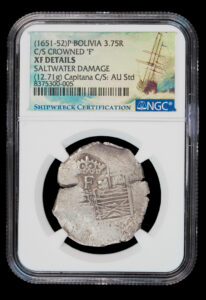

1651-52 Potosi 3.75 Reales NGC XF Details – Capitana Shipwreck
Item #CC-0878 | 1651-52 Potosi 3.75 Reales NGC XF Details – Capitana Shipwreck
Mint: Potosi, Bolivia
Assayer: Not Visible
Ruler/Period: King Philip IV
Grade: XF Details
For details and population on this coin from NGC, click on the serial number here: 8375300-005
Description: This is a fascinating example of a 4 reales devalued through the Potosi scandal at the mint! This coin has a nearly perfect counter stamp on the obverse of a Crown F, part of the shield and the cross on the reverse. Seldom do we see examples so clean like this one, especially with the stamp so clean and nice. The 3.75 reales has quite a rich and interesting history in the world of Spanish coinage. Primarily found on the Capitana and Maravillas shipwrecks, the counter stamped 4 and 8 reales of Potosi were discovered and found to be the coins that were devalued by the Spanish crown due to the impurity of the coins. A whole scandal was found that the silver used in the coins was not up to purity standards, thus resulting in all coins needing to be counter stamped to state they were not up to par. There are many different stamps found on these coins, some with just a crown, others with a letter beneath a crown, as well as a few other ones. If you wish to know more about the various stamps, check out the article here!
Beginning in the early 16th century, the Spanish Empire emerged as the world’s dominant global power, fueled by vast silver and gold resources from the Americas. To manage this wealth, Spain established major colonial mints, starting with the Mexico City Mint in 1535, followed by others such as Lima and Potosí. Early Spanish coins were hand-struck silver cobs, including the famous 8 reales, which became the first truly global currency, circulating throughout Europe, the Americas, Africa, and Asia. By the late 17th and 18th centuries, Spain transitioned to milled coinage with more precise designs to combat fraud and debasement. Spanish imperial coinage not only financed wars and trade but also shaped the foundations of the modern global monetary system.